Sensors and Adaptive Robotic Welding: How Seam Tracking Improves Quality and Reduces Rework
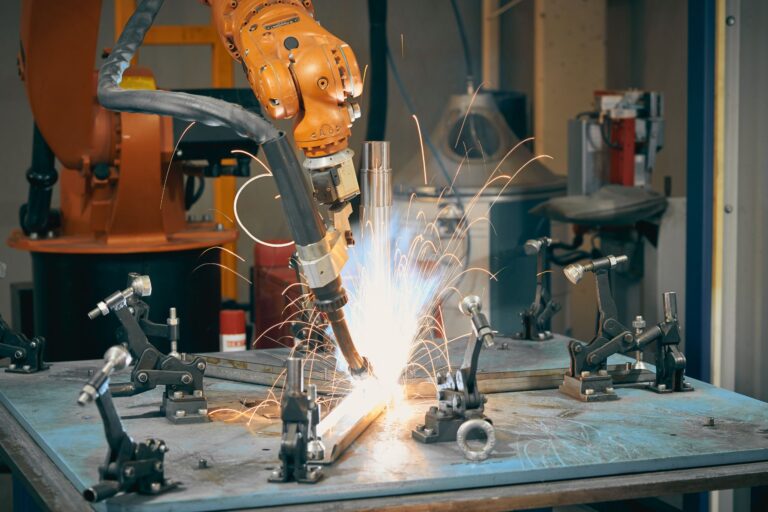
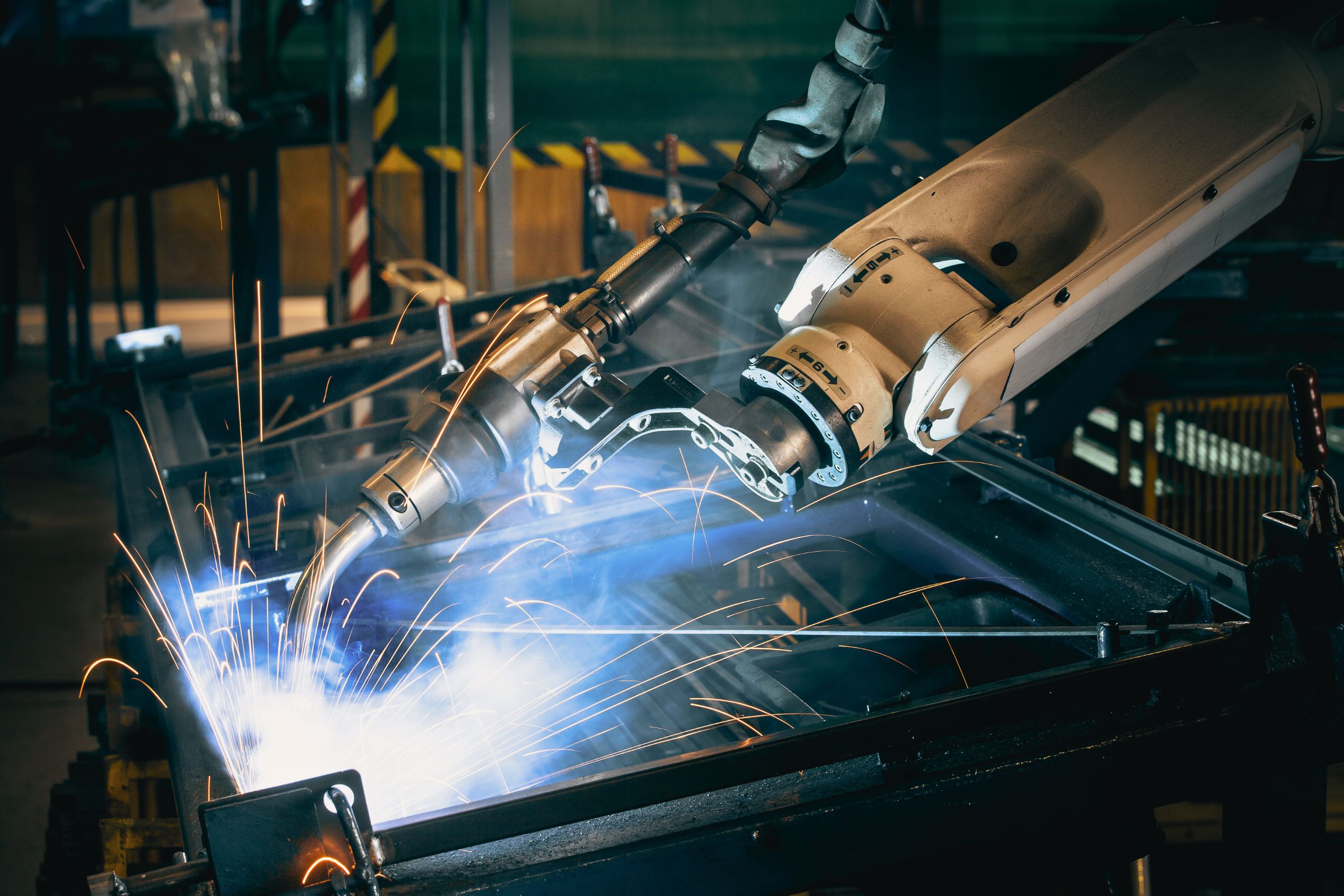
Robotic welding is associated with repeatability, speed, and stability. However, in real production, parts are rarely “ideal.” The joint may vary, tack-up may not be fully consistent, thermal distortion may change the weld position, and differences between batches may lead to deviations from the originally programmed path.
This is where sensors and adaptive control play a key role. They allow the robotic cell not to blindly follow a pre-programmed path, but to detect the actual position of the part or weld seam and correct its motion accordingly. Yaskawa Motoman groups robotic welding sensors into four main categories: touch, through-arc, laser, and vision, with their main functions including seam finding, seam tracking, and part scanning.
Why the standard robotic path is not always enough
In an ideal scenario, the robot receives an accurate model, the part is positioned the same way every time, the fixture holds the geometry consistently, and the joint matches the defined tolerances. In practice, however, deviations are common:
- slight dimensional differences in workpieces;
- inaccuracies in cutting, bending, or tack-up;
- fit-up variations;
- changes in weld position after heating;
- distortion during long or multi-pass welds;
- differences between individual parts and real production batches.
In manual welding, an experienced welder compensates for these deviations through visual judgment and hand movement. In robotic welding, this compensation must be built into the process through fixtures, sensors, software, and a properly designed cell.
FANUC notes that when welding inconsistent production parts, additional sensors such as Touch Sensing and Through Arc Seam Tracking can add capabilities for seam detection, seam tracking, and joint measurement, while adaptive functions can help maintain weld quality.
What seam finding and seam tracking mean
The two terms are often used together, but they do not mean the same thing.
Seam finding means detecting the actual position of the weld seam before welding begins. The robot checks where the joint is located compared to the expected position and shifts the program or starting point accordingly. This is especially useful when parts are similar, but their positioning has minor deviations.
Seam tracking means following the seam during the welding process itself. The system monitors the actual position of the joint and corrects the path in real time. This is more complex, but also more valuable for long welds, thermal distortion, or variable geometry.
Fronius describes this logic through two separate functions: TouchSense for detecting the position of the component and adapting the path before the start, and SeamTracking for automatically correcting the path during welding when component deviations occur.
Main types of sensor solutions in robotic welding
1. Touch sensing: a practical starting point for position detection
Touch sensing usually uses electrical contact between the wire, torch, or a separate measuring element and the part. The robot “checks” where the part or joint edge is actually located, then corrects the program position.
This solution is relatively accessible and useful when there are moderate positioning deviations, but the joint is sufficiently well defined. It is usually not full seam tracking during welding, but rather a method for initial detection and correction.
Practical approach: touch sensing is suitable when the main issue is a small displacement of the part in the fixture, rather than a strongly changing joint along the entire weld length.
2. Through-arc seam tracking: correction through arc data
Through-arc seam tracking uses the welding arc itself as a source of information. The system analyzes electrical signals related to the process and corrects the path so that the torch remains in the correct position relative to the joint.
FANUC describes TAST as a function that automatically adjusts the vertical and lateral robot path to compensate for distortion or incorrect part positioning. The system is often used together with Touch Sensing, which finds the start of the weld joint.
ABB also offers a ThruArc solution through WeldGuide IV, which measures impedance values close to the arc and guides the robot along the correct path. According to ABB, the system is designed for difficult joint variations, including deviations caused by previous production processes.
Practical approach: through-arc seam tracking is useful for long welds and situations where correction during welding is genuinely needed, but it must be assessed whether the specific joint type, process, and access conditions are suitable.
3. Laser seam tracking: geometric information about the real joint
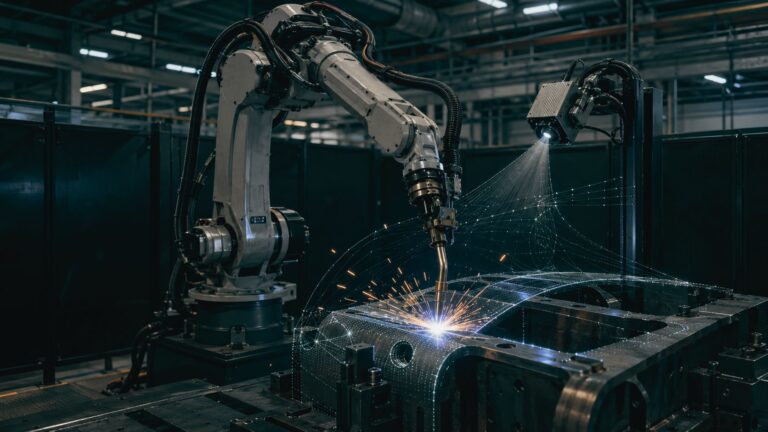
Laser systems usually project a line or profile onto the part and use a camera or optical sensor to detect the actual geometry of the joint. This allows not only positional correction, but also extraction of information about shape, width, angle, volume, or changes in the joint profile.
ABICOR BINZEL describes its iST ARC sensors as real-time seam tracking solutions based on laser triangulation. The company notes that such systems can detect joint deviations and correct tracking, while also providing data on weld characteristics such as area, volume, and angle when needed.
Practical approach: laser tracking is especially valuable for more complex joints, variable geometry, higher accuracy requirements, or when richer information about the joint is required.
4. Vision-based systems: more information, but also more stability requirements
Vision-based systems use cameras and algorithms to detect the joint, part position, or weld characteristics. They can be highly useful in complex applications, but usually require careful control of lighting, reflections, spatter, fumes, and contrast.
A scientific review by Kah, Shrestha, Hiltunen, and Martikainen on sensors and programming in robotic arc welding highlights that the ideal sensor should measure the welding point, detect the seam start in advance, recognize corners, avoid collisions, and be small enough not to restrict access. However, the authors note that such a universal sensor does not exist in practice, and the choice must be made according to the specific welding task.
Practical approach: vision-based solutions are suitable when the process justifies the higher complexity and when the production environment can be controlled well enough.
When sensors are economically justified
Sensors should not be seen as an automatic addition to every robotic cell. They make sense when they solve a specific production problem.
Seam tracking is most often justified when:
- the joint has unavoidable variations;
- parts are difficult to fixture in exactly the same way;
- there are long, curved, or hard-to-access welds;
- thermal distortion changes the position of the joint;
- rework is related to seam displacement;
- operators often make manual corrections;
- higher cell autonomy is required;
- quality needs to become less dependent on individual intervention.
Yaskawa Motoman notes that when combined with the right software, adaptive welding sensors can improve quality and consistency while reducing downtime caused by fixture or robot program adjustments.
How sensors affect quality and rework
The main value of sensors is not that they make the cell “more modern,” but that they reduce the gap between the programmed and the real production situation.
The effect can appear in several areas:
More accurate weld positioning
When the torch follows the actual joint, the risk of weld position deviation is reduced.
Less rework
If defects are related to displacement, variation, or unstable fit-up, adaptive correction can reduce the need for repeat work.
More stable quality between batches
Sensors help make the process less sensitive to small differences between parts.
Less manual intervention
The operator does not have to constantly compensate for deviations through program or positioning corrections.
A better basis for traceability and analysis
In more advanced solutions, sensor data can support root-cause analysis, especially when combined with data from the welding power source and the quality system.
ABICOR BINZEL emphasizes that seam tracking sensors can detect even small deviations in the joint and compensate in real time, helping reduce scrap and rework in automated MIG/MAG and TIG welding.
When touch sensing is enough and when laser or through-arc tracking is needed
The choice of sensor should not start with the technology, but with the problem.
Touch sensing may be sufficient when:
- parts are relatively stable;
- the deviation is mainly in the starting position;
- the joint does not change significantly during welding;
- the goal is correction before the start, not continuous tracking.
Through-arc seam tracking is more suitable when:
- correction is needed during welding;
- long welds may shift due to thermal distortion;
- the process and joint type allow reliable use of arc signals;
- the system can be integrated with the specific robot and welding power source.
Laser seam tracking is justified when:
- joint geometry carries important information;
- more complex joints are involved;
- more precise data about the actual profile is needed;
- higher adaptability and analysis capability are required.
Vision-based systems are suitable when:
- the application requires richer visual information;
- the cell environment can be controlled;
- the additional complexity is justified by the value of the product or the risk of defects.
The best solution is often a combination. For example, FANUC notes that TAST is often used together with Touch Sensing: touch sensing detects the beginning of the joint, while through-arc seam tracking maintains the path during welding.
What should be considered when designing the cell
Adding a sensor is not simply a component choice. It affects the concept of the entire robotic cell.
The engineering phase should consider:
- torch and sensor access to the weld;
- sensor position relative to the torch;
- protection against spatter, fumes, and mechanical impact;
- additional weight on the robot wrist;
- cable package and risk of snagging;
- calibration between sensor, robot, and tool;
- compatibility with the controller and welding power source;
- how parameters will be set and maintained;
- which data will be recorded and used for analysis.
This is especially important because the sensor cannot fully compensate for poor preparation, weak fixturing, or an unstable process. It can increase adaptability, but it should not be used as a substitute for good engineering design.
How to start practically
A good approach is to begin not with the question “Which sensor should we buy?”, but with a short production diagnosis.
A useful sequence is:
1. Identify defects and rework
Which problems are related to weld position, joint deviations, or thermal distortion?
2. Check fit-up and fixtures
If deviations can be solved with better fixturing, this is often the first measure.
3. Determine whether correction is needed before the start or during welding
This separates applications suitable for touch sensing from those requiring seam tracking.
4. Choose the technology according to the joint, process, and production environment
There is no universal sensor for all cases. The choice should follow the task, not the other way around.
5. Include the sensor in the complete concept
Access, safety, programming, maintenance, data, and training should be planned from the beginning.
Conclusion
Sensors and seam tracking technologies transform robotic welding from a strictly repeatable process into a more adaptive production system. They are especially valuable where real parts differ from ideal CAD geometry, where joints vary, or where rework is linked to deviations in weld position.
The best result is achieved when sensors are not added as an “accessory,” but planned as part of the complete engineering concept: part, fixture, robot, welding process, controller, data, and maintenance. In this way, the robotic cell becomes more flexible, more reliable, and more resilient to real production variations.
If you are considering a robotic welding cell or want to reduce rework through a more adaptive process, the Bullitt Robotics team can support you with feasibility assessment, selection of the right concept, and an engineering solution tailored to your parts and production environment. Contact us at +359 89 667 0392 or at office@bullitt-engineering.com to discuss the most suitable approach for your production.
Sources used
- Yaskawa Motoman: types of sensors in robotic welding and applications for seam finding, seam tracking, and part scanning. (Yaskawa Motoman Robotics)
- FANUC: Touch Sensing and Through Arc Seam Tracking for seam finding, seam tracking, and adaptive correction with inconsistent parts. (Fanuc)
- ABB Robotics: WeldGuide IV and ThruArc tracking for following difficult joint variations. (ABB Group)
- Fronius: TouchSense and SeamTracking for compensating component and fixture tolerances. (Fronius)
- ABICOR BINZEL: iST ARC laser seam tracking solution and real-time adaptive correction. (binzel-abicor.com)
- Kah, Shrestha, Hiltunen, Martikainen: review of sensors and programming in robotic arc welding. (Springer)