Offline Programming and Digital Twin in Robotic Welding: How to Shorten the Time from Concept to a Working Cell
When implementing a robotic welding cell, one of the most expensive mistakes is to begin the engineering work only after the equipment has already arrived on site. At that point, every correction costs time, increases downtime, and raises the risk of compromises in layout, accessibility, safety, and cycle time. This is exactly where offline programming and the digital twin change the way automation is planned and implemented: a large part of the design, validation, and optimization can be completed in a virtual environment before the real cell even starts operating. ABB, FANUC, and Yaskawa describe this approach as a way to program, simulate, and optimize without interrupting production, with lower risk and faster implementation.
What offline programming means in practice
Offline programming allows robot programs to be created, tested, and adjusted on a computer instead of directly on the real cell. This is particularly valuable for manufacturers that cannot afford to keep the robot idle while a program is written point by point from a teach pendant. Yaskawa highlights exactly this effect: programs can be developed and refined on a workstation before being transferred to the real system. FANUC also emphasizes that offline programming and testing reduce the time and effort required to set up and commission robotic systems.
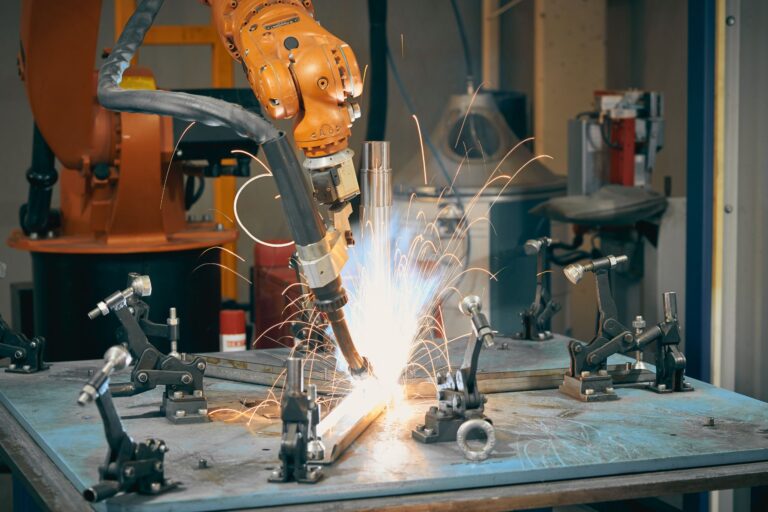
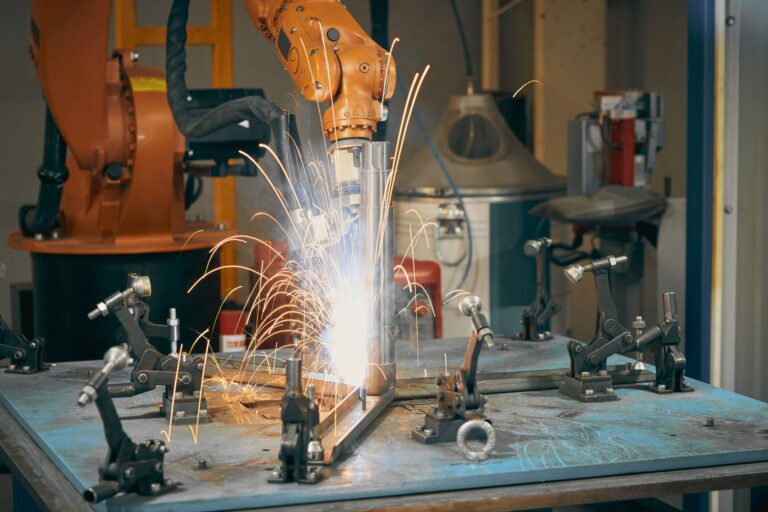
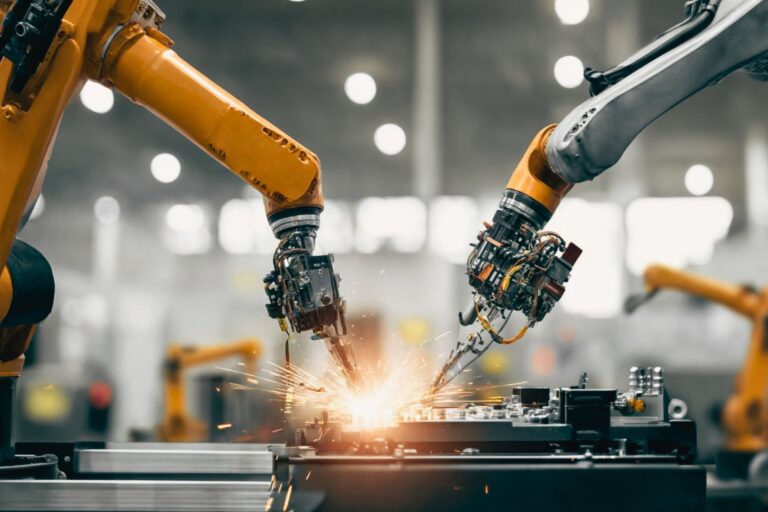
In robotic welding, this means the engineering team can prepare trajectories, define weld sequences, check torch accessibility, assess part positioning, and test different layout options in advance, without blocking the real equipment. In solutions such as FANUC WeldPRO, even CAD-to-path functionality, torch-versus-fixture simulation, collision avoidance, and cycle optimization are presented as direct benefits for welding applications.
What the digital twin adds
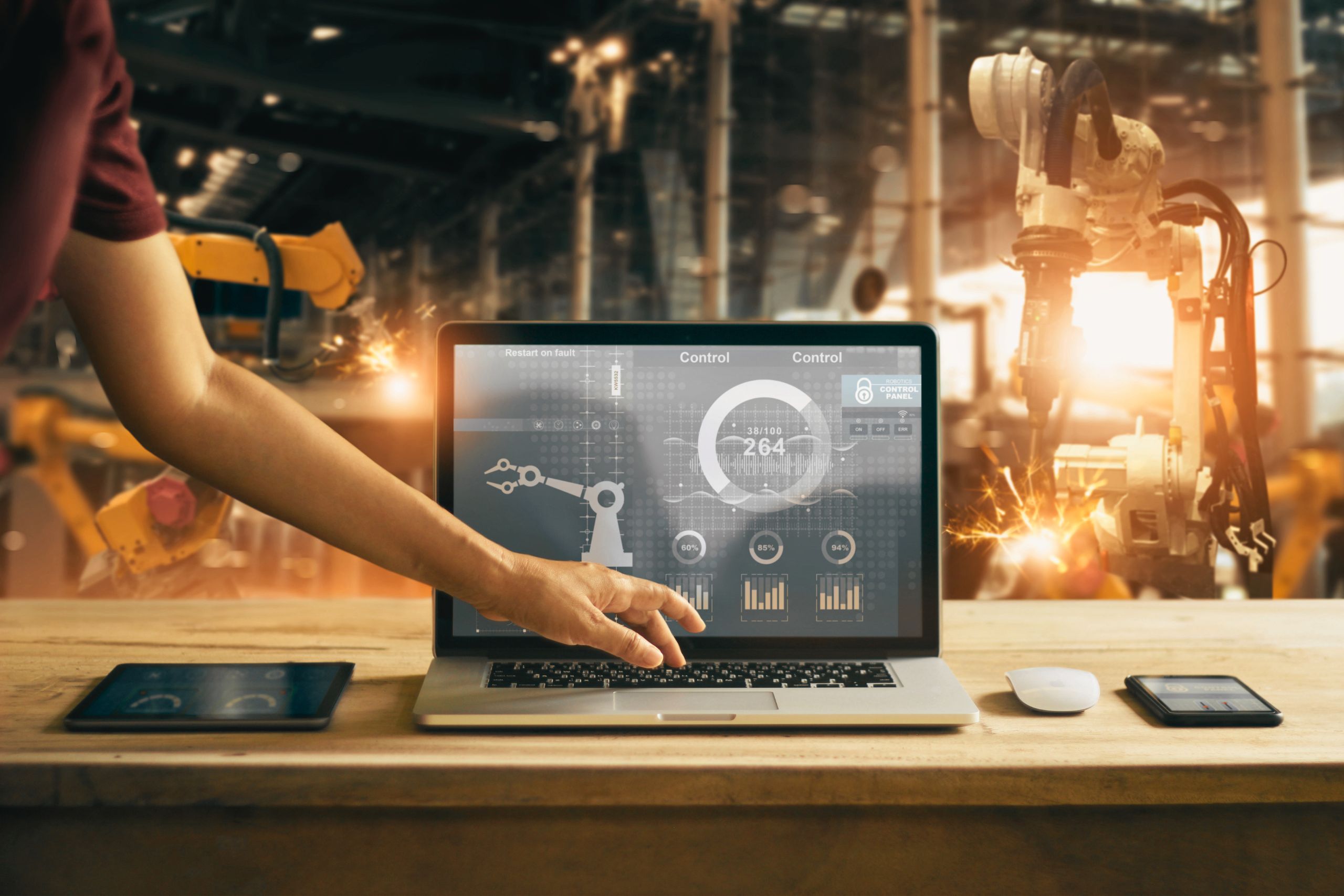
A digital twin is not just a 3D model of the cell. Siemens defines it as a virtual model that reflects a real object or system and enables analysis, simulation, and optimization before or during operation. ABB also describes the digital twin as a complete virtual representation of an asset, subsystem, or system that supports simulation, diagnostics, and predictive planning.
In robotic welding practice, this means not just seeing where the robot will move, but building a digital model of the entire operating logic: robot, positioners, fixtures, parts, access, sequence of operations, and in some cases even the connection to the real controller. ABB explicitly notes that RobotStudio is built around a Virtual Controller, which is a virtual copy of the real software controlling the production robots, allowing highly realistic simulations with real programs.
Why this approach shortens the path from concept to commissioning
The most direct benefit is the reduction of engineering iterations on site. Instead of discovering problems after installation, a large share of them can be identified during the virtual design phase. FANUC states that 3D workcell simulation eliminates the need for physical prototypes, reduces costs, improves accuracy, and optimizes layout. ABB and Siemens also stress that digital simulation allows systems to be designed, tested, and optimized before deployment, reducing engineering time and ramp-up costs.
This is particularly important in welding cells, because corrections often affect not only the robot path, but also part orientation, torch access, interaction with positioners, collision risks, and even the overall safety of the cell. The earlier these dependencies are identified, the less time is lost during actual commissioning.
Where offline programming delivers the greatest value
The biggest impact is typically seen in three scenarios.
First, in complex cells with limited access and multiple axes.
When the system includes a robot, a positioner, an external axis, fixtures, and large parts, simulation helps coordinate movements and verify joint limits, accessibility, and collision risks before the real start. Yaskawa specifically points to coordination between robots and positioners, joint limit analysis, and collision detection as typical OLP applications.
Second, where there are frequent product changes or a high-mix environment.
When new part variants enter production regularly, offline programming makes it possible to prepare programs without stopping the cell. This is especially important for manufacturers that do not operate only in long production runs.
Third, when a faster ramp-up of a new cell is required.
The more work is moved into the virtual phase, the fewer unknowns remain during commissioning. ABB, FANUC, and KUKA all view simulation and the digital twin as ways to shorten implementation time and reduce changes in the real production environment.
What can be checked in advance
A well-built virtual environment makes it possible to verify issues that would otherwise appear too late:
- whether the torch can reach all welds without compromised angles;
- whether there is a risk of collision between the torch, fixture, positioner, or the part itself;
- whether the weld sequence is logical;
- whether there is sufficient margin in terms of reach, axes, and orientation;
- whether the layout is optimal for cycle time and service access;
- whether there are risks of difficult access during maintenance or product changeover.
his is exactly what makes digital preparation valuable not only for the programmer, but for the entire engineering team. Problems are discussed using a shared model, not assumptions made after installation.
Offline programming does not eliminate real commissioning, but it makes it more controllable
It is important to note that the virtual environment does not remove the need for real-world fine-tuning. The actual part, tolerances, variation in fit-up, arc behavior, and process-specific factors will always require final adjustment on site. But the difference is substantial: instead of inventing the cell on the shop floor, the team fine-tunes an already validated concept. ABB points out that realism comes precisely from using the Virtual Controller and real programs, not from abstract graphical visualization.
This reduces the risk of the commissioning phase turning into a series of improvisations. In practice, offline programming and the digital twin do not replace engineering experience. They give it a better working environment.
What such a project should reasonably include from the start
To deliver real value, virtual preparation must be built on sufficiently accurate input data. This usually includes:
- 3D models of parts and fixtures;
- an accurate cell layout;
- selection of robot, torch, positioners, and external axes;
- loading, unloading, and safety logic;
- priorities for cycle time, accessibility, and flexibility;
- a clear distinction between what will be validated virtually and what will be finalized on site.
The earlier these elements are included in the engineering process, the greater the chance of avoiding expensive changes after the equipment is delivered.
The practical business impact
For manufacturing companies, the key question is not whether the technology is modern, but whether it leads to faster and more predictable implementation. This is where the real value of offline programming and the digital twin lies: less time spent on trial-and-error on site, less production downtime, lower risk of layout mistakes, better preparation for commissioning, and easier management of future changes. This logic is consistently confirmed in materials from ABB, FANUC, Siemens, and Yaskawa.
For teams implementing robotic welding, this means not simply better simulation, but a shorter and more controllable path from engineering concept to a working cell.
Conclusion
Offline programming and the digital twin are transforming the implementation of robotic welding cells because they move a large share of risk and engineering uncertainty away from the shop floor and into the virtual phase. This allows issues related to accessibility, collisions, layout, sequence, and cycle time to be identified earlier, making real commissioning faster and more predictable. For manufacturers, this means less downtime, better use of engineering resources, and greater control over the final result.
If you are planning a new robotic welding cell or want to reduce implementation risk in an automation project, the Bullitt Robotics team can support you with concept development, virtual preparation, and engineering assessment tailored to your parts and production environment. Contact us at +359 89 667 0392 or at office@bullitt-engineering.com to discuss the most suitable approach for your production.