Physical AI in Robotic Welding: Beyond Predefined Programming
Industrial robots traditionally perform predefined movements with high precision and repeatability. This approach works extremely well in stable processes involving identical parts and tightly controlled production conditions. However, when the geometry, fit-up or position of a workpiece changes, a conventional robotic system often requires reprogramming or human intervention.
On July 8, 2026, Mistral AI introduced Robostral Navigate, its first embodied AI model. It enables robots to perceive their surroundings through a standard RGB camera and execute navigation instructions given in natural language. The model is not designed for welding, but it demonstrates a broader direction in robotics: the gradual transition from executing strictly defined commands to perceiving, interpreting and adapting to the physical environment.
This development is associated with the concept of Physical AI. Physical AI models do not merely process information. They also participate in controlling machines and actions in the real world. In manufacturing, this means robotic systems that can use images, sensor data and accumulated production experience to respond to variations and make limited decisions within a predefined process.
From Automation to Controlled Autonomy
The International Federation of Robotics identifies AI and autonomy as one of the leading robotics trends in 2026. According to the organisation, analytical AI, generative AI and agentic AI are gradually expanding the ability of robots to recognise patterns, plan actions and adapt to more complex production situations.
In robotic welding, three main levels of automation can be distinguished.
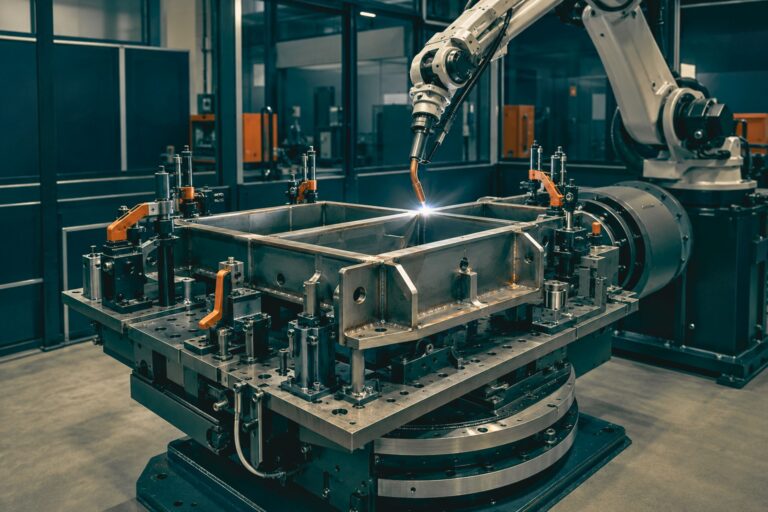
In conventional robotic automation, the path, speed and welding parameters are predefined. The system can achieve high productivity, but it relies on consistent geometry and precise workpiece positioning.
In adaptive welding, sensors and seam-tracking systems detect the actual position of the joint and correct the robot’s path. This makes it possible to compensate for certain geometric variations without changing the fundamental logic of the programme.
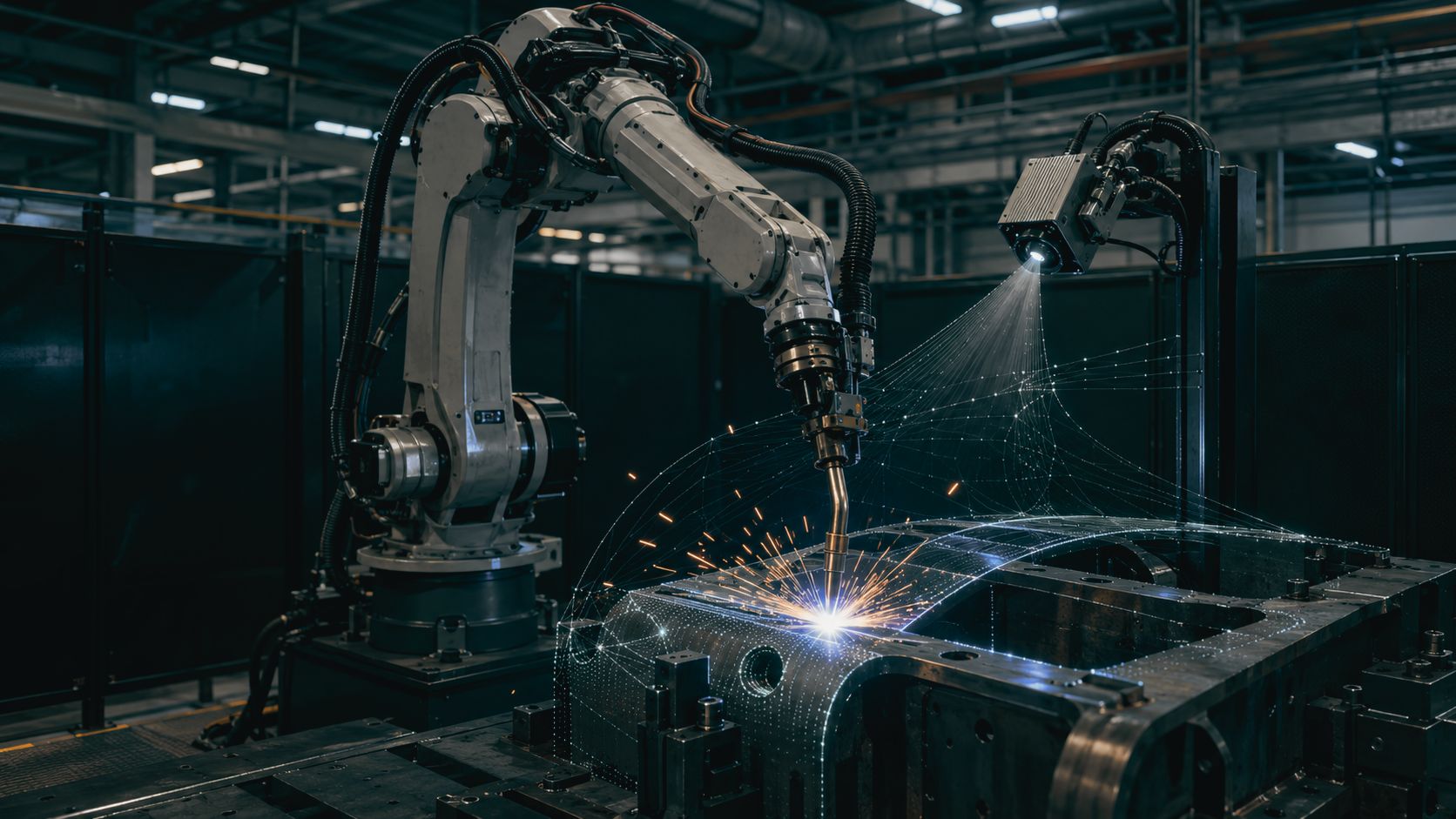
The next level adds machine vision, AI models and production data. The system can recognise a component, compare it with previously processed parts, suggest an appropriate programme and adjust certain aspects of the process according to the observed conditions. This is not yet fully autonomous production. It is controlled autonomy operating within clearly defined boundaries and under human supervision.
What Is Already Possible in Robotic Welding
Physical AI is not merely a theoretical concept. In 2026, welding automation technology providers are introducing solutions that combine machine vision, automatic recognition and adaptive control.
One area of development is AI-based part recognition. Instead of programming every new product entirely from the beginning, the system analyses its geometry and searches for similarities with previously processed parts. It can then associate the recognised component with an existing programme and validated welding parameters. This allows accumulated production knowledge to be reused.
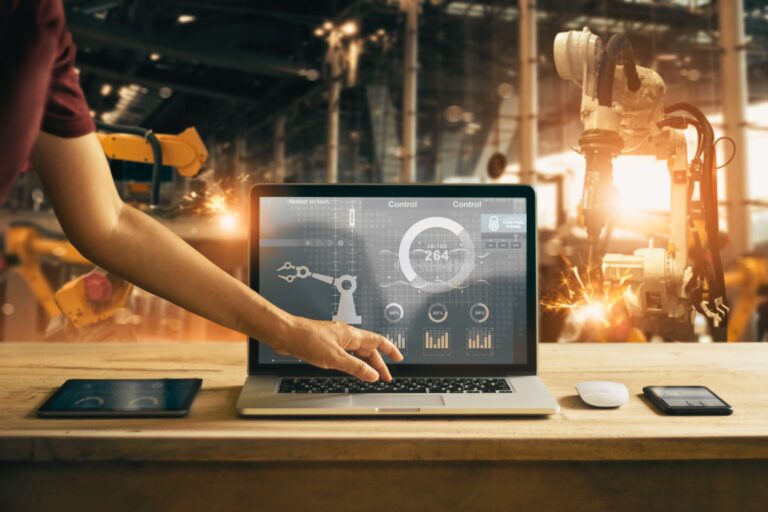
Another area is monitoring the welding process through machine vision. Video, arc parameters and other sensor data can be analysed while the system is operating. When a variation is detected, the system can notify the operator, recommend a correction or, at a more advanced level of automation, adjust certain parameters in real time.
Centralised platforms for storing welding data are also developing. They connect individual robotic cells and create a digital history of completed welds, process parameters, deviations and corrective actions. The data therefore becomes a tool for traceability, quality analysis and the training of future AI models.
Why Physical AI Matters for High-Mix, Low-Volume Production
Traditional robotic automation is easiest to justify when producing large quantities of identical parts. In high-mix, low-volume production, the time required for programming, setup and testing can reduce the economic benefits of automation.
AI-based recognition of similar parts, automatic path generation and adaptive control can gradually change this relationship. If part of the engineering work can be reused, a robotic cell can switch more quickly between different products.
Potential benefits include:
- shorter programming and setup times;
- faster introduction of new products;
- reduced dependence on repeated manual corrections;
- better use of accumulated production data;
- more predictable quality within controlled variation limits;
- higher utilisation of the robotic cell.
This is particularly relevant to manufacturers of metal structures, machinery, equipment and components, where products are often similar without being completely identical.
Physical AI Does Not Remove the Need for a Stable Process
An intelligent system cannot compensate indefinitely for poor joint preparation, unsuitable fixturing, unstable wire feeding, shielding gas problems or an incorrectly defined welding procedure.
The more autonomy is expected from a robot, the more important the quality of the input data and the clearly defined process boundaries become. The AI model must recognise not only normal variations, but also situations in which the safe response is to stop the operation and request specialist intervention.
For this reason, implementing Physical AI does not begin with selecting a model or camera. It begins with an analysis of the components, welding technology, permissible variations, positioning, sensors, safety systems and the required integration with the rest of the production environment.
The Role of the Welding Engineer and System Integrator
Greater autonomy does not eliminate the need for human expertise. It changes how that expertise is applied.
The welding engineer continues to define the permissible technological parameters, qualified welding procedures and quality criteria. The system integrator must translate these requirements into a reliable robotic solution equipped with appropriate sensors, control logic and safe operating modes for handling deviations.
Human oversight is also necessary when validating AI-based decisions. Before an automatic correction is authorised in production, it must be verified that the adjustment remains within the limits of the applicable welding procedure and does not create a quality or safety risk.
New considerations are also added to the conventional safety requirements of the robotic cell. These include model reliability, production data protection, control over software updates and system behaviour when the available information is inaccurate or incomplete.
How Manufacturers Can Prepare
The transition towards Physical AI can be gradual. A company does not need to begin with a fully autonomous robotic cell.
A practical approach includes several consecutive steps:
- Select a specific operation with a measurable problem, such as excessive programming time, frequent corrections or significant part-to-part variation.
- Stabilise the welding process, joint preparation and fixturing before introducing more complex automation.
- Collect structured data about programmes, process parameters, deviations, defects and corrective actions.
- Add machine vision or other sensors to monitor the actual condition of the workpiece and process.
- Conduct a pilot implementation with clearly defined indicators for time, quality, rework and productivity.
- Gradually progress from monitoring to assisted control, adaptive corrections and controlled autonomy.
This approach makes it possible to evaluate the value of each successive step before the system becomes more complex.
The Next Step Is Not a Robot Without an Operator, but a Robot With More Context
Physical AI will not suddenly replace traditional programming, sensors or engineering control. A more likely development is the integration of these technologies into systems with access to more information about the workpiece, the process and the production environment.
The robot will continue to operate within the limits of a defined technology, but it will become better able to recognise the current situation, use accumulated data and respond to permissible variations. This can make robotic welding applicable to a wider range of products and smaller production batches.
For manufacturers, the most important question is not whether a system carries the Physical AI label. What matters is whether it solves a specific production problem, works reliably with the company’s actual components and delivers measurable improvements in quality, lead time and resource utilisation.
Bullitt Robotics develops and integrates robotic automation solutions tailored to the specific production processes and requirements of industrial companies. To discuss your automation opportunities, contact our team at +359 89 667 0392 or office@bullitt-engineering.com.