From Manual to Robotic Welding: 7 Critical Conditions for Successful Automation
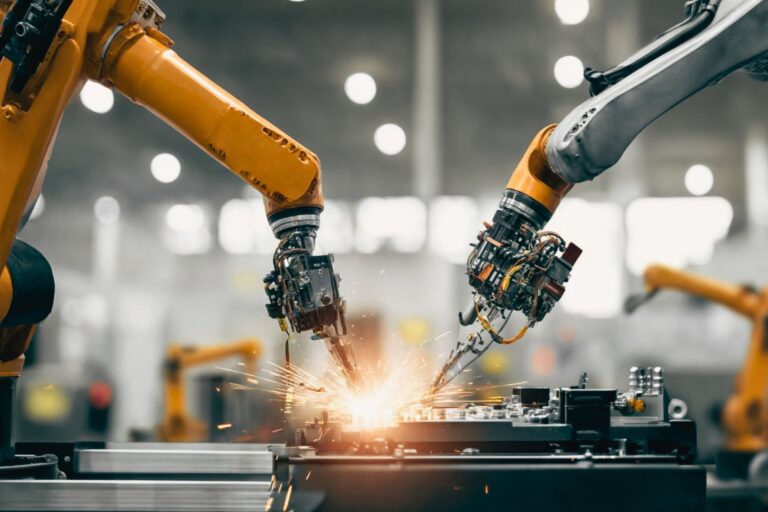
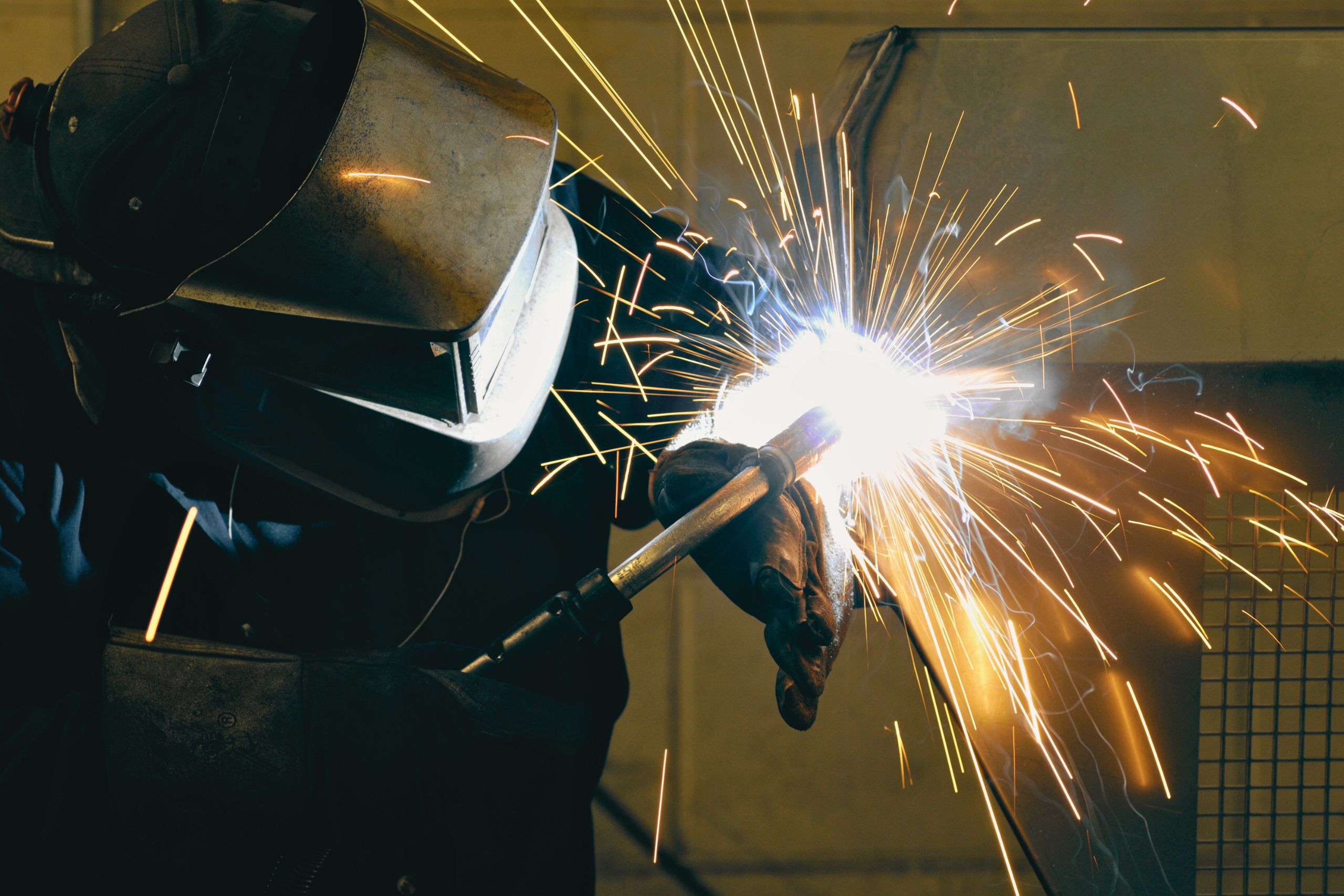
Robotic welding is not simply “replacing the welder with a robot.” It changes the entire workflow: part preparation, fixturing, process selection, programming, safety, quality control, and data management. When automation projects fail, the root cause is rarely the robot itself. It is usually the absence of one or more conditions required for a stable, repeatable process. Below are seven conditions that most strongly determine success.
1) Predictable fit-up: tolerances, gaps, and repeatability of parts
A robot is unforgiving to variation. In manual welding, an experienced welder can compensate. In robotic welding, variation turns into geometric deviation, lack of fusion, undercut, and unstable arc behavior. Start by defining fit-up tolerances and acceptable gap ranges for your typical joint types, including clear criteria for accepting assemblies before welding. It helps to treat “as-fit” tolerance as its own reality (not just drawing tolerances), because it drives real production risk.
Practical rule: if your parts come from multiple suppliers or from processes with high variability (thermal cutting, bending, manual tack-up), stabilize preparation and assembly first, then automate.
2) Fixturing and positioning: fixtures are the hidden success factor of the cell
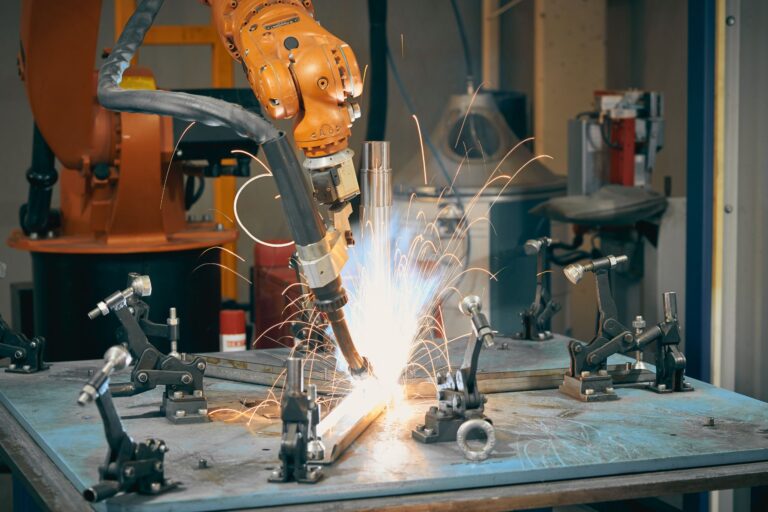
In robotic welding, the fixture is what guarantees repeatable part position and orientation relative to the torch. Good fixture design reduces load/unload time, preserves torch access, avoids collisions, and stabilizes geometry during thermal distortion. Many integrators explicitly highlight repeatability and operator-friendly fixture handling as key to productivity and quality.
What to validate early in the concept:
- Torch access to all welds without “acrobatics” or collision risk
- Use of positioners/turntables where they reduce programming complexity and improve weld positions
- Changeover/setup time and its impact on cycle time
3) Select the process and consumables for the real part, not for habit
MIG/MAG, TIG, pulse mode, synergic programs, wire, shielding gas, and torch configuration should be selected based on material, thickness, weld position, appearance requirements, and acceptable distortion. A single “universal” setting rarely works if you have high product mix.
A workable approach:
- Define 2–3 typical families of parts and weld types
- For each family, set target parameters (speed, heat input, number of passes) and quality criteria
- Validate and lock the procedures as a standard that the robot can reproduce consistently
4) Sensors and in-process correction: when you need seam tracking vs. when a good fixture is enough
If joint variation is unavoidable, sensor solutions can be the difference between stable production and constant stops. In practice, this includes approaches such as thru-the-arc seam tracking and vision/laser systems that detect the joint and adjust the path. This is especially important with variable batches, thermal distortion, and constrained access joints.
Decision logic:
- If your tolerances and fixturing are very stable, you can start without sensors and add them later
- If you routinely rely on manual correction, plan seam tracking from day one
5) Programming and production readiness: offline programming and simulation as a deployment accelerator
When programs are developed and validated offline, production does not stop, and collision risk drops significantly. Offline programming and simulation are especially valuable for:
- frequent product changes
- small batches
- complex trajectories and tight work envelopes
Sources consistently point to the productivity impact: reduced downtime, faster program creation and optimization, and smoother commissioning.
6) Safety and risk assessment: a mandatory discipline, not a formality
A robotic welding cell combines risks from industrial robotics, arc welding (electric arc, fumes), mechanical equipment (positioners), hot parts, and motion in confined areas. Updated safety standards for industrial robots set clear requirements for safe design, risk assessment, and risk reduction measures, both for robots and for integrated systems.
In addition, American Welding Society (AWS) provides a risk assessment framework for robotic arc welding that is useful for designing safeguards and procedures.
Minimum you should plan for:
- formal risk assessment and protective measures (fencing, scanners/light curtains, interlocks)
- safe modes for teaching and testing
- training for personnel working in and around the cell
7) People, competencies, and data: training, standard work, and measurable KPIs
Automation is built on competencies: welding engineering/technology, operators, maintenance, and quality. You need clear roles and training for programming, process control, and safe operation. AWS offers a competence certification track for robotic arc welding, which signals how seriously the industry treats the ability to achieve acceptable weld quality with robots.
Data management matters just as much: parameter logging, traceability, and deviation analysis. Platforms like WeldCube illustrate the direction: planning, recording, analyzing, and visualizing welding production data to control and improve performance.
KPIs that actually help:
- first-pass yield (how many parts pass without rework)
- changeover time
- downtime by root cause (collisions, consumable shortages, arc instability)
- parameter deviations vs. the defined procedures
Conclusion
Successful welding automation starts with disciplined part preparation, repeatable fixturing, and a robust process foundation. Add sensors where variation is unavoidable, reduce downtime through offline programming, and do not compromise on safety and training. When these seven conditions are in place, the robot becomes a predictable production asset, not “an expensive machine that only works in ideal conditions.”
If you are planning a robotic welding cell or upgrading an existing process, the Bullitt Robotics team can support you with feasibility assessment, concept development, and implementation tailored to your parts and production environment. Contact us at +359 89 667 0392 or at office@bullitt-engineering.com to discuss your goals and the most suitable approach for your production.